[SSR] 4. SSR from a UX Perspective
December 13, 2019
Translated from the Korean original.
We’ve now built two different setups using SSR. The second one was probably harder to pull off than the first — but did all that extra effort actually buy us better UX?
My answer: not really.
The user’s perspective
Fetching data on the server
Here’s a diagram of what actually happens on a request, using the approach from 3. SSR - Data Fetch.
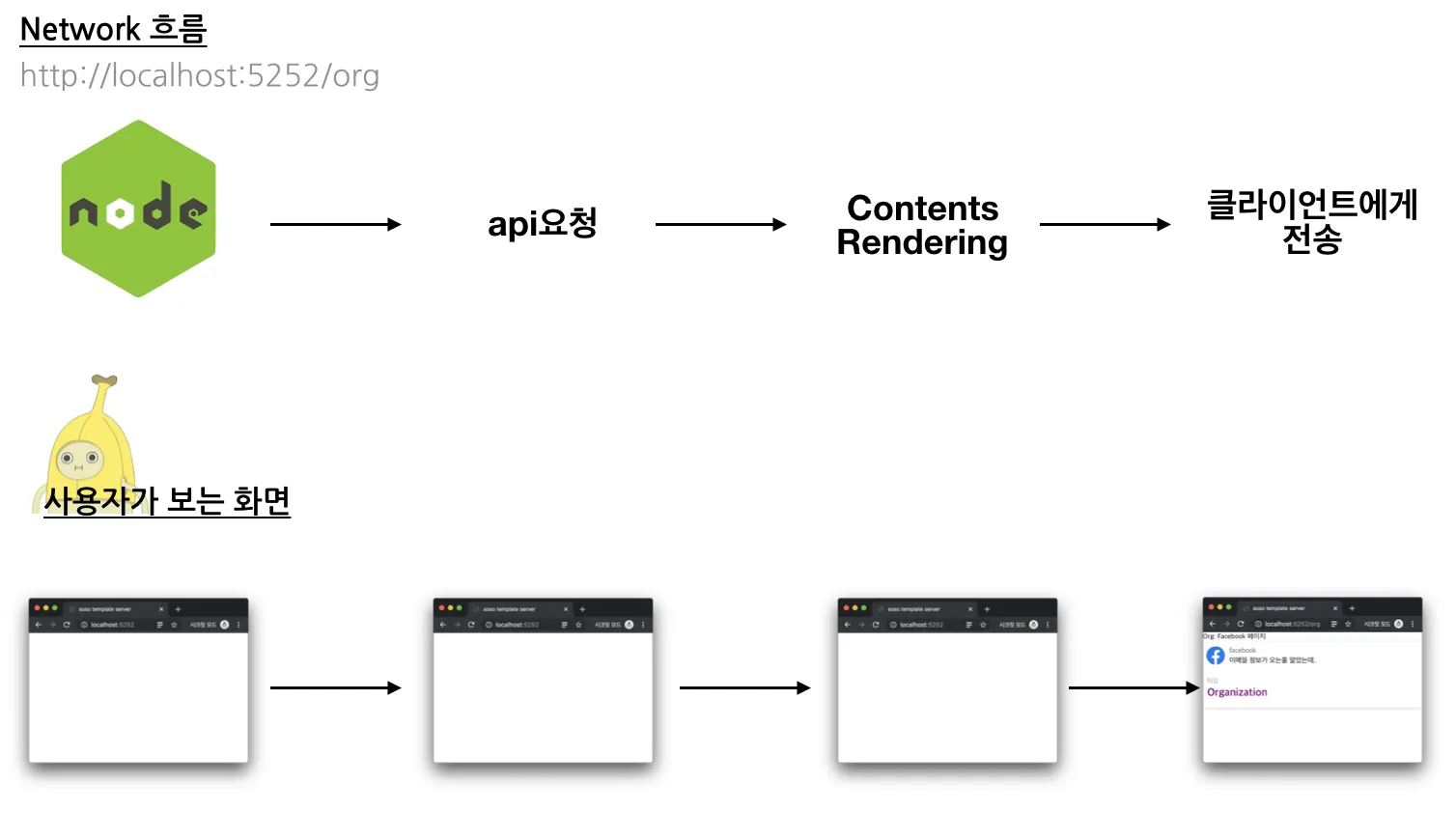 The request hits express, and until the api call resolves and an html with the content already drawn reaches the client, the user is staring at a blank screen. That’s it.
The longer the api call takes, the longer that blank screen sticks around. Hard to call that good UX.
Cache the content-filled html itself, and this gets faster — that would likely help UX in a real way. This tutorial won’t get into that, though.
Delivering quickly from the server
Now switch to the approach from 2. SSR - Basic.
The server skips the api call entirely, renders just the client’s Loader or header, and ships that down fast. Everything after that gets handed off to the client.
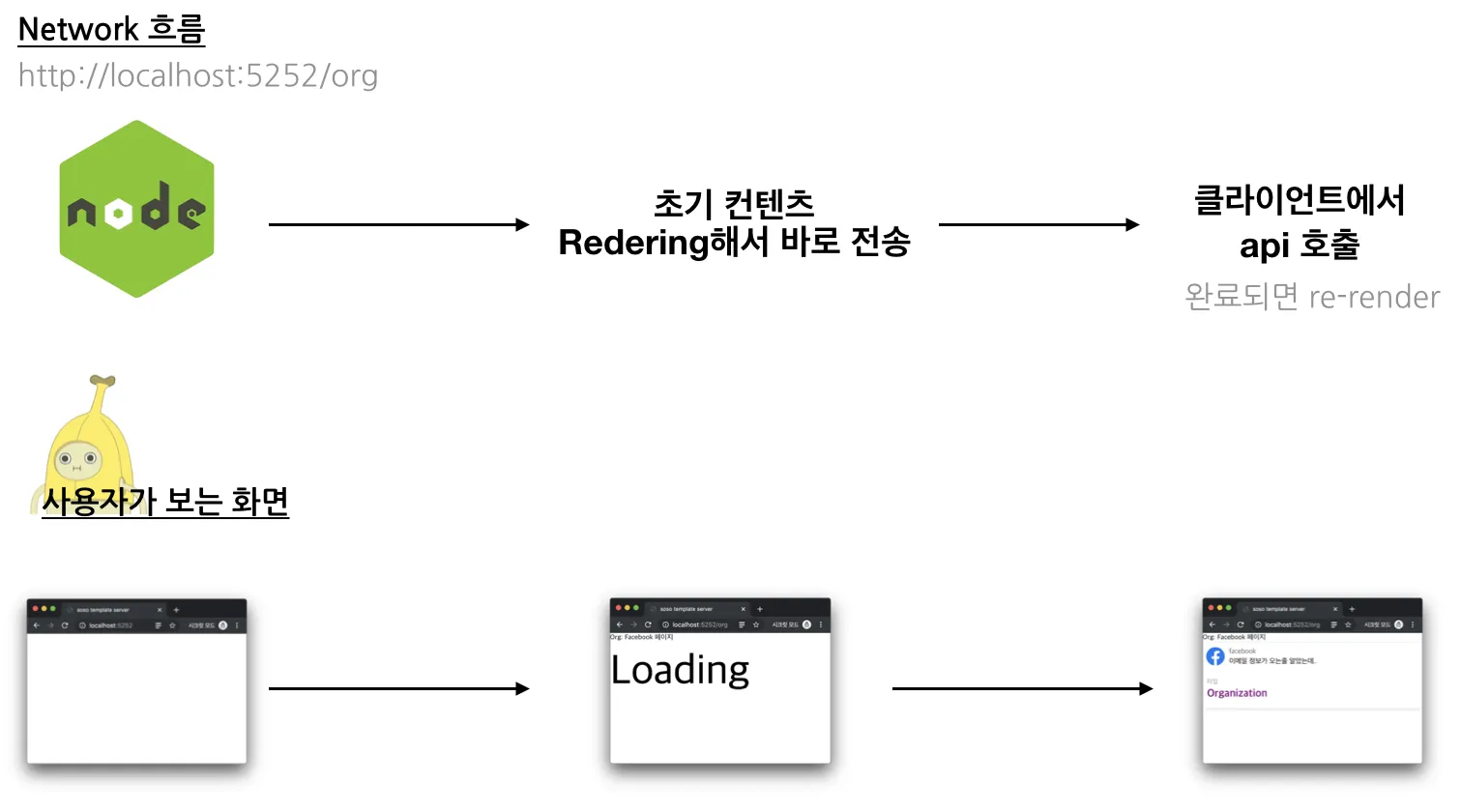
Now the user sees something fast. The diagram just shows a big Loading label, but swap in a skeleton UI and the UX gets even better.
Fetching data on the server - WebView
This approach also loses a real advantage once you’re inside a webview.
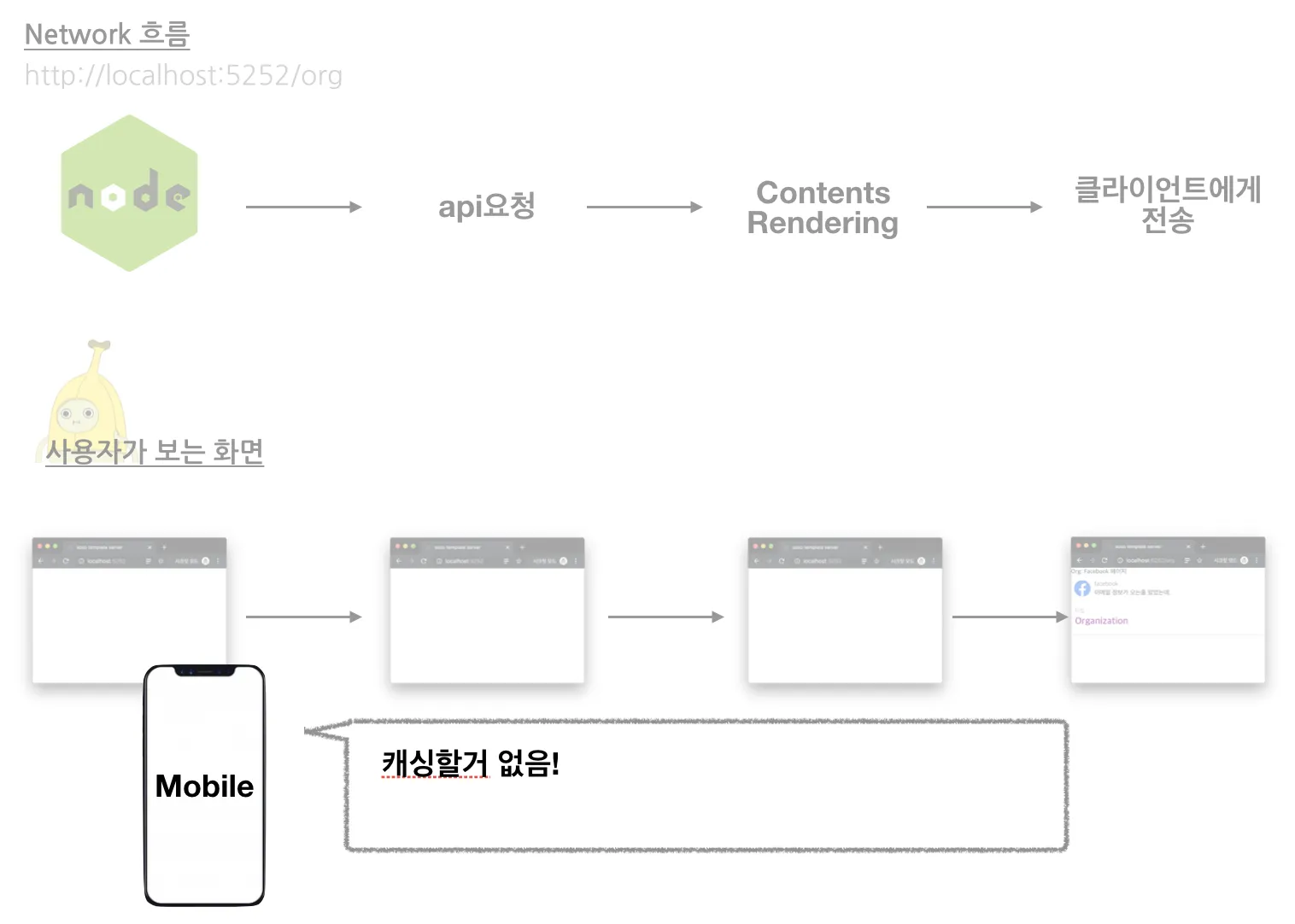
When the server handles the api request itself, what the client gets back is a finished html document, so none of it can be cached.
Delivering quickly from the server - WebView
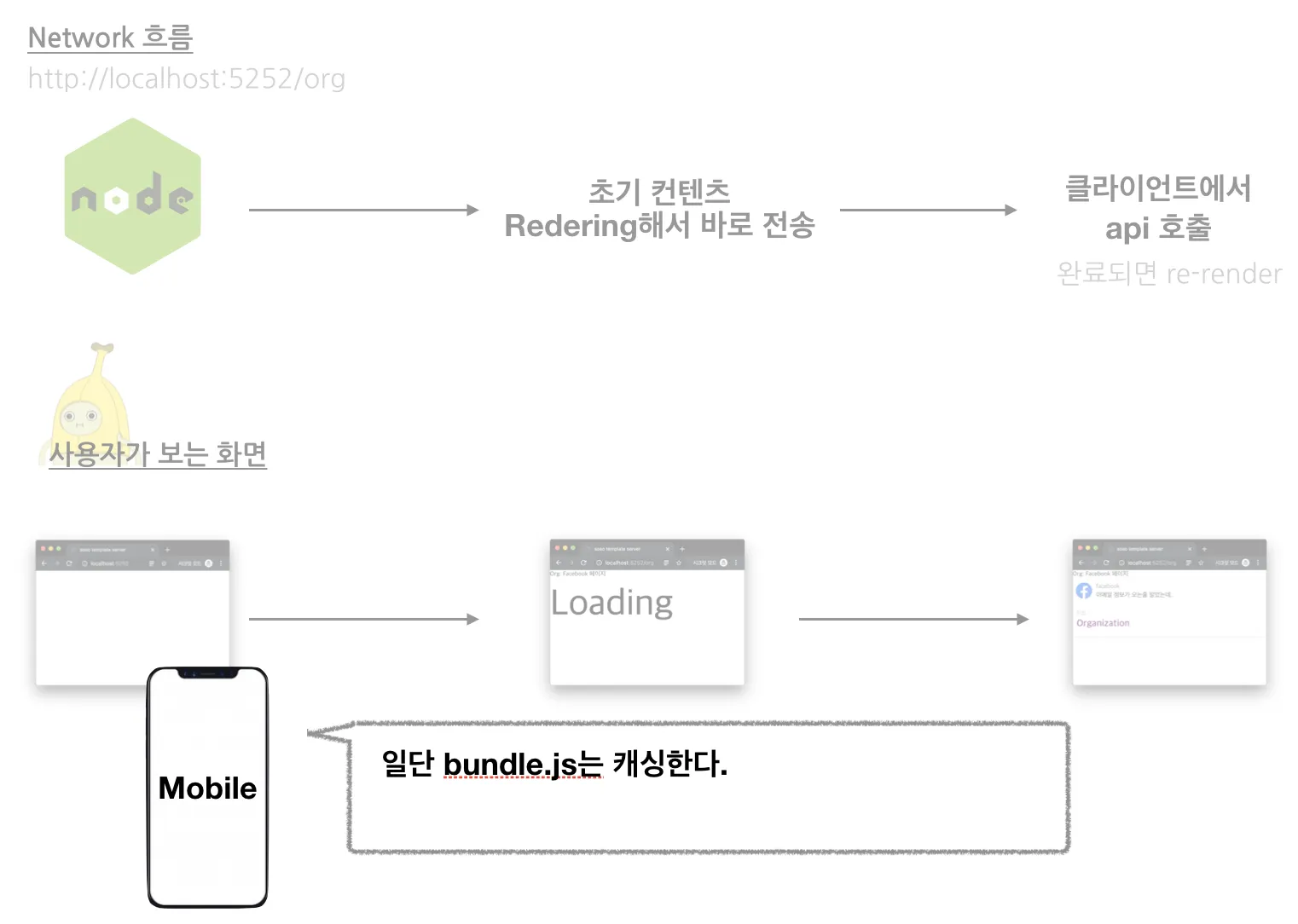
With the second approach, at least part of the bundle needed for client-side rendering can be cached. Naturally, that beats fetching the bundle from express every single time.
It’s not all downside
That said, this isn’t purely a downside either. Flip it around, and the real story is that the client always ends up at the mercy of whatever express is doing. Let’s walk through a low-tier device scenario.
Downloading the full contents
Every request and every api call happens on express, so the only variables affecting how fast the user gets content are the network and express’s own specs (server CPU, and so on).
On a device whose CPU is worse than express’s, content can actually load faster this way than through the other approach.
SSR + CSR
Here, what matters for download speed is the user’s own network and their device specs. On a low-end device, both of those are working against you, so content loads painfully slowly. In that case, you’re better off letting express deliver everything.
Closing out this tutorial
And that’s the SSR tutorial, done. Building SSR without a framework threw a lot of bugs and rough edges at me along the way, and I hope walking through it helps anyone else stuck on the same problems.
You can find all the code from this tutorial here. I’d really appreciate any feedback, whether that’s a comment or a GitHub issue. 🙂
